
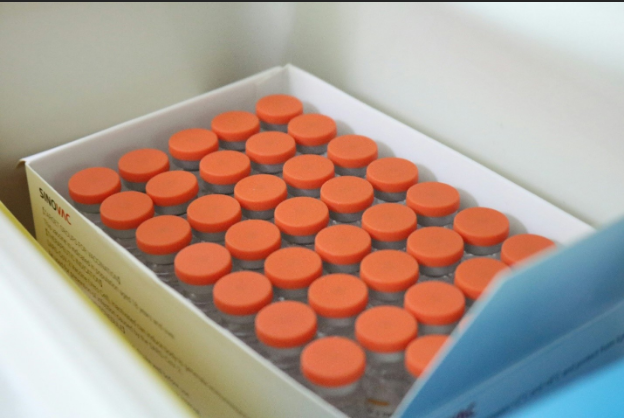
Peptides are sensitive to moisture, temperature changes, molecular movement, and other environmental conditions. During storage and transportation, these factors can contribute to chemical degradation, aggregation, or structural changes that may affect peptide stability.
How a peptide is prepared before these exposures occur can influence its ability to retain intended characteristics. For this reason, preservation methods used before storage and distribution play an important role in protecting sensitive peptide formulations.
Lyophilization is one such approach. Understanding what the process involves provides useful context for examining the specific ways it supports peptide integrity during storage and shipping.
Key Takeaways
- Lyophilization reduces moisture-related degradation risks.
- A dry matrix can slow certain chemical reactions.
- Proper processing helps preserve peptide structure.
- Freeze-drying can support more reliable shipping conditions.
- Formulation design and validation remain essential for consistent results.
What Is Lyophilization and Why Is It Used?
Lyophilization, also called freeze-drying, is a preservation process in which a material is frozen and placed under reduced pressure. The frozen water then passes directly from ice to vapor through sublimation, leaving the material in a dry, solid form. The cycle typically includes freezing, primary drying, and secondary drying, each controlling the removal of water from the formulation.
Research shows that product presentation can influence stability under environmental stress. Lyophilization can enhance peptide stability during storage and distribution, particularly when prolonged storage in liquid form is less suitable. It also allows preparation to occur later when required, helping preserve the formulation before use.
7 Ways Lyophilization Protects Peptide Stability During Storage and Shipping
Building on how lyophilization works, its protective value becomes clearer when each stability mechanism is considered separately. The following sections examine how the dried state influences various risks that can arise during storage and distribution.
1. Reduces Moisture-Driven Degradation
Water can promote hydrolysis and other moisture-dependent reactions that damage susceptible peptide bonds. Lyophilization removes most of this water, creating a low-moisture environment that can help slow such degradation. This is especially valuable for formulations that are unstable in aqueous conditions. Lower water activity can also reduce the moisture available for hydrolytic reactions.
However, the final product still requires a carefully defined residual moisture range because excessive dryness may not suit every formulation. Residual moisture testing can help confirm that the dried product remains within established specifications. By controlling water content during processing, lyophilization can help maintain peptide stability during extended storage by limiting conditions that favor moisture-driven degradation.
2. Slows Chemical Degradation
Some peptide degradation pathways can continue even without direct involvement from water. Their progression often depends on how freely molecules move and interact within a formulation. Lyophilization converts the peptide into a solid matrix where molecular mobility is greatly reduced. This immobilization can be especially important when reactive groups remain chemically susceptible after drying.
This restricted movement can slow certain chemical reactions that would otherwise proceed more easily in solution. The benefit differs from moisture removal because it targets reaction dynamics rather than hydrolysis. Maintaining this controlled solid state can help preserve peptide stability throughout the intended shelf life.
3. Preserves Peptide Structural Integrity
Peptides can experience structural stress during freezing and drying as solvent conditions and solute concentrations change. For anti-aging peptides and other research materials, carefully selected excipients may help protect molecular integrity throughout these transitions. Sugars and other stabilizing agents can support the peptide while water is removed. They may also help preserve local molecular interactions disrupted as the frozen matrix develops.
Buffer selection, pH, peptide concentration, and thermal properties can also influence how the formulation behaves during freeze-drying. A properly optimized cycle considers factors such as glass transition and collapse behavior when establishing suitable processing conditions. These controls can help reduce unwanted structural changes before the peptide enters long-term storage.
4. Limits Aggregation in the Solid State
Aggregation occurs when peptide molecules associate and form larger structures that may affect purity, solubility, clarity, or consistency. Lyophilization can help reduce this risk by placing peptides in a controlled solid environment where unwanted molecular association is less likely to progress. The reduced mobility of neighboring molecules can make continued self-association less favorable during storage.
Appropriate formulation design may further help keep molecules separated, especially for peptides that tend to self-associate. Peptide concentration and excipient selection can influence these intermolecular interactions and should be optimized for the specific formulation. This mechanism focuses on physical association rather than chemical breakdown, keeping aggregation control distinct from other stability pathways.
5. Improves Stability During Temperature Excursions
Shipping can expose peptide products to temporary temperature changes as they move through warehouses, vehicles, and transfer points. A properly developed lyophilized formulation, including a Retatrutide research peptide formulation where applicable, may tolerate defined short-term temperature excursions better than an equivalent liquid preparation when supported by stability data. Excursion studies can assess whether critical quality attributes remain acceptable after temporary thermal exposure.
This does not mean every lyophilized peptide can be shipped at room temperature. Acceptable time and temperature limits should be established through product-specific stability studies rather than assumed from the lyophilized state alone. When those limits are validated, the dried formulation can provide greater protection during brief thermal changes encountered in distribution.
6. Reduces Agitation-Related Shipping Stress
Liquid peptide formulations can experience repeated movement, agitation, and exposure to liquid-air or liquid-container interfaces during transportation. These conditions may contribute to physical instability in susceptible formulations as packages move through multiple handling stages. Repeated exposure to the interface can increase the likelihood that stress-sensitive molecules undergo unfavorable physical changes.
Lyophilization removes the liquid phase before shipping, reducing exposure to these liquid-specific mechanical stresses. Appropriate container closure, cushioning, and secondary packaging are still necessary to protect the product from physical damage, but the peptide is no longer subject to continuous fluid movement during transit.
7. Delays Aqueous Exposure Until Use
Lyophilization allows a peptide to remain dry until it is ready for preparation. Keeping the peptide in this dried state throughout storage and transport reduces the time it spends in an aqueous environment, where some degradation pathways may proceed more readily. This separation between storage and reconstitution helps preserve the intended dry-state condition for longer.
Depending on the material and validated instructions, bacteriostatic water or another suitable diluent may be used for reconstitution. The correct diluent, volume, concentration, and handling method should be determined for the specific peptide. Delaying reconstitution until needed, therefore, extends the protective benefit of the dry state through storage, shipping, and final preparation.
Conclusion
Lyophilization provides a practical way to protect sensitive peptide formulations by creating a controlled dry state before extended storage or transport. Its protective effects span several distinct mechanisms, including reduced moisture exposure, slower chemical reactions, structural preservation, aggregation control, and reduced liquid-phase stress during shipping.
The dried state may also improve tolerance to validated temperature excursions and limit prolonged aqueous exposure until preparation is required. These benefits depend on formulation design, cycle development, packaging, and product-specific stability data. When these elements are appropriately matched to the material, lyophilization can support peptide stability throughout storage and distribution.
Explore reliable peptide research solutions at Next Level Research Labs for your laboratory needs.
FAQs
Can lyophilization extend peptide shelf life?
Lyophilization may extend shelf life when formulation, packaging, storage conditions, and stability testing support the peptide’s validated storage period.
Does every peptide need the same lyophilization cycle?
No. Different peptide sequences, concentrations, excipients, and thermal properties may require individually optimized freezing, primary drying, and secondary drying conditions.
How is lyophilization performance verified?
Performance may be evaluated by assessing residual moisture, purity, cake integrity, reconstitution behavior, and stability against predefined product quality specifications.
Can oxygen still affect lyophilized peptides?
Yes. Some lyophilized peptides remain susceptible to oxidation when oxygen is present in the vial headspace or enters through the container closure.
Why is the cake’s appearance important after freeze-drying?
Cake appearance can indicate collapse, shrinkage, or other drying changes, but analytical testing remains necessary to confirm product quality and stability.